
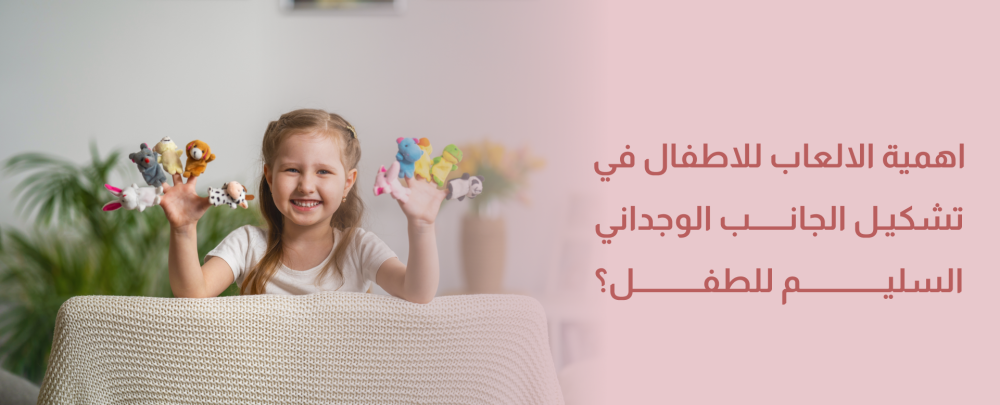
Play is a crucial part of any child's life from birth through adolescence, where the concept of play has the greatest impact. Play is the most significant influence in shaping a child's emotions, helping to build their personality and sense of self. It is a vital and innate activity and behavior that is essential for a child's life. Because the world of childhood is full of discovery and imagination, play is not merely a fleeting activity; it is a child's first language for expressing feelings, learning interaction skills, and achieving psychological and emotional balance.
Games and the emotional aspect: a profound educational relationship:
A child's emotional development forms the cornerstone of their psychological and social growth. It is responsible for their feelings, responses, and interactions with others. Play serves as an effective educational tool for naturally and spontaneously supporting this aspect of their development. When a child plays, they not only release physical energy but also express their inner feelings, whether joy, fear, anxiety, or even sadness. Furthermore, through play, children learn how to cope with different situations, how to empathize with others, and gradually begin to build and express their self-concept. These practices contribute to the development of emotional intelligence in ways that are difficult to achieve through traditional education.
Some of the most prominent aspects that emphasize the importance of games for children are the following:
- Boosting self-confidence through taking on challenges and small successes.
- Developing communication and interaction skills with peers.
- Providing a safe environment for releasing negative emotions and feelings.
- Strengthening family bonds when playing with parents or siblings.
- Supporting psychological resilience and problem-solving skills.

How do games contribute to building a child's emotional development?
Games play a key role in developing children's emotional intelligence through:
- Promoting empathy: Through role-playing and interacting with others, the child learns to understand and empathize with the feelings of others.
- Managing emotions: Games provide a safe space to express joy, anger, or frustration, helping the child to regulate their emotions.
- Developing social skills: Group games train the child in cooperation, negotiation, and participation, which are the basis of positive relationships.
- Building self-confidence: Small achievements during play enhance a child's sense of success and increase their psychological resilience.
- Stress relief: Play relieves anxiety and gives the child a sense of comfort, especially motor or sensory games.
Types of games that nurture the emotional aspect:
Not all games are created equal in their impact, and it is best to choose games that support emotional development such as:
- Cooperative and group games encourage your child to engage in both types to develop their individual and social skills.
- Role-playing games (such as "Doctor" or "Teacher")
- Artistic and creative games such as drawing or coloring
- Interactive stories and mini-plays
*Avoid excessive digital gaming: Despite the benefits of some digital games, excessive gaming can limit social interaction and physical activity, negatively impacting emotional development.
Tips for parents: How to use games to enhance emotional development?
- Play regularly with your child to strengthen emotional bonds, as nothing fosters a stronger emotional connection between you and your child like playing together. These moments are invaluable in shaping their character.
- Observe the types of games your child chooses, discuss them with them, suggest suitable games, and participate in playing them, such as craft games. There are many creative craftswomen in the Kingdom, like the owner of the Chirality website , whose handmade items are particularly valuable, especially dolls that don't frighten children like other dolls such as the recently popular La Popo. They also have a special section dedicated to crafts related to the Kingdom's heritage, such as the Teacher Raghad doll (a National Day set with a brooch ) and the Burqa keychain for mobile phones, which help children learn about their national identity in a way that resonates with them. )
- With the idea of limited play
- Use playtime to teach the child to express their feelings in words.
- Be a role model in expressing your feelings in a healthy way while playing.
in conclusion:
Given the emotional and psychological challenges children may face during their developmental stages, play remains an effective and essential tool for shaping their emotional well-being. This highlights the importance of play for children not only as a source of fun, but also as an educational tool for building emotionally and behaviorally balanced individuals from a very young age.